Addressing deforestation risks in our primary supply chains

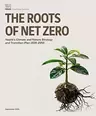
Working to address deforestation risks is key to our Roots of Net Zero integrated climate and nature strategy and transition plan (pdf, 14Mb).
Population growth and increasing demand for food mean there can be pressure to convert natural ecosystems into farmland, even though trees and forests play a critical role in protecting biodiversity and limiting the effects of climate change.
But the past decade has shown us that seeking to address deforestation after it has occurred is not enough. It is essential that we continue to adopt responsible sourcing practices and engage farming communities located in and around forests. In that way, we aim to help reduce the risk of additional habitat loss and support forest preservation.
Key terms explained
Net zero
In 2019, we announced our ambition to reach net zero GHG emissions by 2050 at the latest. In 2026, we updated our timebound plan, the Nestlé Roots of Net Zero (pdf, 14Mb), which underpins our Group's climate and nature strategy and acts as our transition plan aligned with a 1.5°C pathway as validated by the Science Based Targets initiative (SBTi). We will balance any remaining emissions through high-quality nature-based solutions, such as agroforestry, silvopasture and the restoration of forests and peatland. Read more about net zero.
Responsible sourcing
For Nestlé, responsible sourcing means improving the traceability of our ingredients and monitoring how they are produced. This involves applying our environmental and human rights requirements - detailed in our Responsible Sourcing Core Requirements (pdf, 2Mb) - at the different stages of our supply chain. Examples of these requirements include that land and resources of Indigenous Peoples and local communities are respected, and that no deforestation and no conversion of forests and other ecosystems occur in our supply chain. Read more about responsible sourcing.
Net zero
In 2019, we announced our ambition to reach net zero GHG emissions by 2050 at the latest. In 2026, we updated our timebound plan, the Nestlé Roots of Net Zero (pdf, 14Mb), which underpins our Group's climate and nature strategy and acts as our transition plan aligned with a 1.5°C pathway as validated by the Science Based Targets initiative (SBTi). We will balance any remaining emissions through high-quality nature-based solutions, such as agroforestry, silvopasture and the restoration of forests and peatland. Read more about net zero.
Responsible sourcing
For Nestlé, responsible sourcing means improving the traceability of our ingredients and monitoring how they are produced. This involves applying our environmental and human rights requirements - detailed in our Responsible Sourcing Core Requirements (pdf, 2Mb) - at the different stages of our supply chain. Examples of these requirements include that land and resources of Indigenous Peoples and local communities are respected, and that no deforestation and no conversion of forests and other ecosystems occur in our supply chain. Read more about responsible sourcing.
Our progress
96.9
%
1 Learn more in the Environmental Disclosures section of our 2025 Non-Financial Statement (pdf, 16Mb). This performance number differs from the one available in our Non-Financial Statement 2025 due to a change in the methodology during the first half of 2026. Now we consider ingredients volumes converted back to their original fresh state, instead of their processed form.
Deforestation-free means that commodities in scope were assessed as produced on land that has not been subject to deforestation or conversion after a specific cut-off date that varies by commodity, but no later than December 31, 2020. Commodities accounted as deforestation-free include in part commodities subject to the requirements of the EU Deforestation Regulation. However, the scope of disclosed metric goes beyond these jurisdiction-specific mandatory requirements as part of Nestlé’s global approach on deforestation.
As part of our long-standing commitment to addressing deforestation, we have been reporting on our progress towards achieving and maintaining, by the end of 2025, 100% assessed deforestation-free primary supply chains for cocoa, green coffee,2 meat, palm oil, pulp and paper, soy, and sugar.
Our performance by the end of 2025, at 96.9%, follows over a decade of investment in traceability, supplier engagement and landscape-level interventions, while being challenged by operational complexities, particularly in extended supply chains and geographies with limited verification infrastructure. In cocoa, based on the learnings of previous years, we have focused our deforestation-free efforts on “first-mile traceability” (i.e. tracking beans from their origin to the supplier’s first point of aggregation). This approach aligns our assessment with emerging industry practices and reinforces the integrity of our traceability systems at the start of the supply chain.
The gap between our performance and meeting our commitment in full is due to traceability and infrastructure challenges in global commodity supply chains. Our commitment stands but reflects this complexity. That is why, from 2026 onwards, we aim to maintain 95%-100% assessed deforestation-free primary supply chains for cocoa, green coffee, meat, palm oil, pulp and paper, soy, and sugar.
2 Green coffee is the raw and unroasted beans of the coffee plant.
Read more in Responsible Sourcing Core Requirements (pdf, 2Mb).
Working to assess deforestation risks and tackle their root causes
We take a risk-based approach to implementing actions.
We start by mapping our primary supply chains (meat, palm oil, pulp and paper, soy, sugar, cocoa and coffee) in scope to identify the origins of our raw materials. We then take steps to assess that our sourcing is preventing the risk of deforestation, as defined in our Responsible Sourcing Core Requirements. Raw materials are assessed as deforestation-free when either they can be traced to low-risk origins or have been assessed as deforestation-free either from the sky or from the ground.
Our Responsible Sourcing Core Requirements (pdf, 2Mb) establish that all materials and ingredients supplied to Nestlé must comply with no-deforestation and no-conversion requirements. This means that there is no expansion or production on areas converted from natural forests and other natural ecosystems, including primary forests, protected areas (e.g. IUCN protected areas categories I-IV, UNESCO World Heritage Sites, wetlands on the Ramsar List), High Conservation Values (HCV) lands in and around the producer territory, high carbon stock (HCS) forests, wetlands, savannas, peatlands regardless of depth (except where farming practices protect peat), and riparian buffers adjacent to aquatic ecosystems (except where it complies with applicable law).
We are using the following tools in our deforestation risk assessment and mitigation:
1. Supply chain mapping
2. Desktop-based risk assessment
3. On-the-ground assessment
4. Satellite monitoring
2. Desktop-based risk assessment
3. On-the-ground assessment
4. Satellite monitoring
1. Supplier engagement
2. Landscape projects
3. Smallholder farmer initiatives
4. Industry collaboration
2. Landscape projects
3. Smallholder farmer initiatives
4. Industry collaboration
We assess the deforestation-free status of the relevant key ingredients in the following ways:
Traceable to low-risk origin = Volumes are traced back to regions classified as being at low risk of deforestation, using tools such as Maplecroft. The traceability exercise is carried out in collaboration with our partners (e.g., Earthworm Foundation and Proforest) or using technology.
Assessed on the ground = Volumes are assessed through on-the-ground assessments, including by HCS Approach and HCV assessments, by our partners (e.g., Earthworm Foundation, Proforest and SGS) and/or through certification such as Roundtable on Responsible Soy and Proterra (soy), Forestry and Stewardship Council and PEFC (paper), and Roundtable on Sustainable Palm Oil . Only segregated volumes are accepted as deforestation-free.
Assessed from the sky = Volumes are assessed through satellite monitoring of production sites (farms, mills or supply areas) in our supply chain identified through a traceability exercise.
Unknown = Not traced or being traced, but not yet assessed as deforestation-free.
Read more about our approach to traceability in relation to how we source palm oil.
Deforestation-free in our primary supply chains
3.4%
Unknown
13.8%
Assessed from the sky
45.1%
Assessed on the ground
37.7%
Traceable to non-very-high-risk origins
96.7%
of primary supply chain assessed as deforestation-free*
4819.1 kilotonnes
(2025)
* For coffee, cocoa, meat, palm oil, pulp and paper, soy and sugar
Coffee deforestation-free status
5.9%
Unknown
0.0%
Assessed from the sky
94.1%
Assessed on the ground
0.0%
Traceable to non-very-high-risk origins
94.2%
of primary supply chain assessed as deforestation-free
902.5 kilotonnes
(2025)
Cocoa deforestation-free status
8.3%
Unknown
0.0%
Assessed from the sky
91.7%
Assessed on the ground
0.0%
Traceable to non-very-high-risk origins
91.7%
of primary supply chain assessed as deforestation-free
317.7 kilotonnes
(2025)
Palm oil deforestation-free status
3.7%
Unknown
66.9%
Assessed from the sky
28.5%
Assessed on the ground
0.9%
Traceable to non-very-high-risk origins
96.3%
of primary supply chain assessed as deforestation-free
422.4 kilotonnes
(2025)
Sugar deforestation-free status
3.0%
Unknown
28.7%
Assessed from the sky
30.6%
Assessed on the ground
37.7%
Traceable to non-very-high-risk origins
97.0%
of primary supply chain assessed as deforestation-free
1512.1 kilotonnes
(2025)
Soy deforestation-free status
2.0%
Unknown
0.0%
Assessed from the sky
22.0%
Assessed on the ground
76.0%
Traceable to non-very-high-risk origins
97.9%
of primary supply chain assessed as deforestation-free
642.6 kilotonnes
(2025)
Pulp and paper deforestation-free status
0.6%
Unknown
0.0%
Assessed from the sky
26.8%
Assessed on the ground
72.6%
Traceable to non-very-high-risk origins
99.4%
of primary supply chain assessed as deforestation-free
1001.7 kilotonnes
(2025)
Meat deforestation-free status
0.0%
Unknown
0.0%
Assessed from the sky
0.0%
Assessed on the ground
100.0%
Traceable to non-very-high-risk origins
100.0%
of primary supply chain assessed as deforestation-free
20.1 kilotonnes
(2025)