
Travel through our history timeline

Time travel through the Nestlé story
Come on a journey through Nestlé's company history. We'll begin in 1866 and finish in the present day.
Along the way, we'll see why Henri Nestlé created infant cereal, how the company weathered downturns and two world wars. We'll follow the acquisitions and the move into chocolate, pharmaceuticals and petcare. Before arriving here today, at the world's largest food and beverage company. Ready?
Watch the heritage film to experience key moments from our history, then explore the story in more detail through the interactive timeline below. Alternatively, you can download Nestlé company history timeline (pdf, 2Mb)
Our heritage: The pioneers, innovation and spirit behind Nestlé

Welcome to the Nestlé Historical Archives. Here we hold 160 years of our history. Come with me and I'll show you around.
I've prepared some things for you here at the table. Here is one of the first tins of Henri Nestlé's Farine Lactée and Milkmaid was the first condensed milk arriving in Europe. And, we see a Jersey cow.
At the very beginning, milk was at the heart. Our earliest pioneers, Henri Nestlé, the Page brothers, and Daniel Peter used science to bring innovative food solutions to milk. Their ingenuity drove them to solve real problems and enhance people's quality of life. They didn't wait for perfect conditions. They adapted, kept learning and moved ideas forward, building the foundations of the company we know today.
Henri Nestlé didn't start in food. He ran a soft drinks business and another one lighting the streets of Vevey with gas. But when that business declined, he reinvented himself, drawing on science to develop Farine Lactée. Its breakthrough wasn't new ingredients, but how they were combined, carefully formulated to nourish infants. It was innovation, grounded in science, born from adversity.
Around the same time, the Page brothers, two Americans in Switzerland, saw the potential of condensed milk after its use in the American Civil War. They founded the Anglo-Swiss Condensed Milk Company. In 1905, these two businesses merged creating the foundation of our modern Nestlé.
Another pioneer, Daniel Peter, took inspiration from Henri Nestlé. At a time when chocolate was only a drink, he solved the challenge of adding milk to cocoa. The result, the world's first milk chocolate bar. So we transformed chocolate forever.
The spirit of innovation continued into the 20th century. During the Great Depression, Nestlé developed soluble coffee that preserved the flavor, and the aroma. In 1938, Nescafé introduced coffee in a completely new way. Decades later, Nespresso redefined the coffee experience once again.
Alongside innovation, Nestlé learned early how to bring bold ideas to people in ways that build trust, relevance, and reach. From those early days to today, so much has remained constant. A real drive to keep learning and innovating to unlock the power of food and beverages and make a meaningful difference in people's lives. As you can see, this Nestlé spirit has always seen us adapt and thrive through times of truly great changes, and it's still very much alive today.
END OF TRANSCRIPT
Explore our interactive timeline
1866 – 1904
The pioneer years
1905 – 1913
The Belle Époque
1914 – 1918
Adapting during wartime
1919 – 1938
Crisis and opportunity
1939 – 1947
Riding out the storm
1948 – 1959
Creating convenience for consumers
1960 – 1980
Frozen foods to pharmaceuticals
1981 – 1999
Towards health, nutrition and wellness
2000 – 2016
Creating shared value
2017 – present
Creating a better tomorrow, today
The pioneer years
1866 – 1904
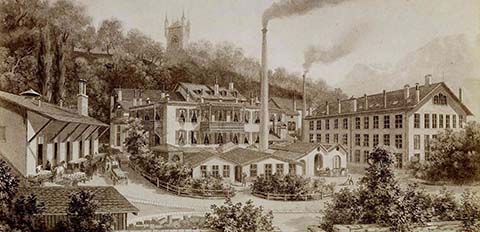
The Nestlé company history begins in 1866, with the foundation of the Anglo-Swiss Condensed Milk Company. Henri Nestlé develops a breakthrough baby food in 1867 and in 1905 his company merges with Anglo-Swiss to form what we know as the Nestlé Group.
Period highlights
1866 – 1904


The Belle Époque
1905 – 1913
By 1905, Nestlé & Anglo Swiss has more than 20 factories, and is selling in Africa, Asia, Latin America and Australia. As World War One approaches, the company enjoys the period of prosperity known as the Belle Époque or 'Beautiful Age'. It's now a global dairy company.
Period highlights
1905 – 1913

Adapting during wartime
1914 – 1918
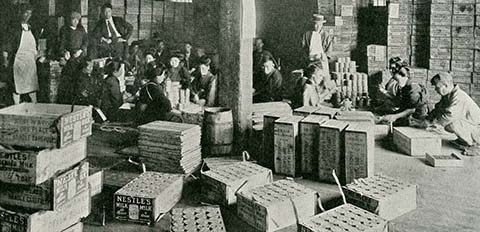
The outbreak of war in 1914, creates new challenges and opportunities. The demand for condensed milk and chocolate increases, while a shortage of raw materials and cross-border trade slow down production. To solve these problems, the company acquires processing facilities in the US and Australia. By the end of the war, Nestlé & Anglo-Swiss has 40 factories.
Period highlights
1914 – 1918


Crisis and opportunity
1919 – 1938
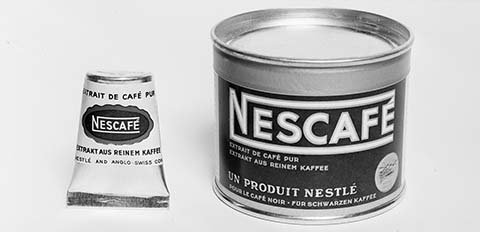
After the war, military demand for milk declines, causing a major crisis for Nestlé & Anglo-Swiss in 1921. The company recovers, but is rocked by the Wall Street Crash, which reduces consumer purchasing power. Despite the downs, the era delivers many positives. The company's management corps is professionalized, research is centralized and pioneering products like Nescafé coffee are launched.
Period highlights
1919 – 1938


Riding out the storm
1939 – 1947
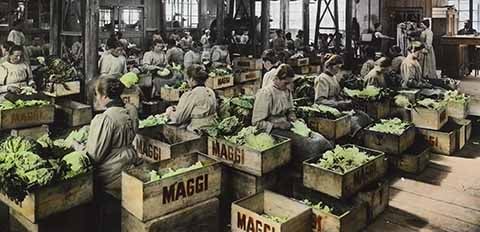
The outbreak of World War Two in 1939 affects virtually every market. Nestlé & Anglo-Swiss continues to operate in difficult circumstances, supplying both civilians and armed forces. In 1947, the company adds Maggi soups and seasonings to its product range and adopts the name Nestlé Alimentana.
Period highlights
1939 – 1947


Creating convenience for consumers
1948 – 1959
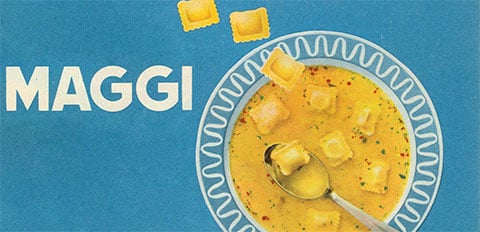
The post-war period is marked by growing prosperity. People in the US and Europe start spending money on machines that make life easier, like refrigerators and freezers. Convenience foods also become popular, with Nestlé Alimentana launching new products including Nesquik and Maggi ready meals.
Period highlights
1948 – 1959


Frozen foods to pharmaceuticals
1960 – 1980
Acquisitions enable Nestlé to enter new areas like frozen foods, while expanding its traditional businesses. In the 1970s the company diversifies into pharmaceuticals and cosmetics. Growing criticism from activist groups allege Nestlé's marketing of infant food is unethical. Nestlé later becomes one the first companies to apply the WHO code on breast-milk substitutes.
Period highlights
1960 – 1980


Towards health, nutrition and wellness
1981 – 1999
After years of growth, Nestlé lets go of unprofitable brands. It starts promoting brands that meet the demands of more health-conscious consumers, in line with its new 'Nutrition, Health and Wellness' strategy. The company expands in the US, Eastern Europe and Asia, and targets for global leadership in water, ice cream and animal food.
Period highlights

1981 – 1999


Creating shared value
2000 – 2016
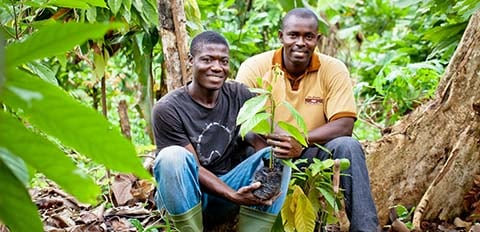
Nestlé articulates its Creating Shared Value approach to business. Followed by the launch of the Nestlé Cocoa Plan and Nescafé Plan to further develop sustainable supply chains. While the business continues strengthening its position in traditional segments like infant formula and frozen foods, it also starts focusing on medical nutrition.
Period highlights
2000 – 2016


Creating a better tomorrow, today
2017 – present
Alongside traditional market segments, Nestlé continues to find new growth opportunities in healthcare. It acquires businesses including Zenpep, Vital Proteins and Aimmune, plus a majority stake in Orgain, a leader in plant-based nutrition. The company also steps up its sustainability aims, committing to recyclable packaging and net zero emissions.
Period highlights

2017 – present


